How Much Is My Caravan Worth? A UK Seller’s Guide to Caravan Valuations
How much is my caravan worth? The 8 factors that set its value, trade vs retail prices, the best time to sell and how to get a free, no-obligation valuation.
“How much is my caravan worth?” is the first question every owner asks when it’s time to sell. The honest answer is that it depends. Two caravans of the same make, model and year can be worth very different amounts once you take condition, damp and history into account.
This guide explains exactly what buyers look at, how trade and retail prices differ, and how to get a realistic valuation without the guesswork.
The 8 factors that decide your caravan’s value
1. Age and model year
Caravans lose value fastest in their first few years, then the drop slows down. Buyers go by the model year, not the date you bought it. A 2018 model bought new in 2019 is still valued as a 2018 caravan.
Once a caravan is 15 to 20 years old, its value depends far more on condition than on age. A dry, well-kept older caravan can still sell well. A tired one may be worth little more than its parts.
2. Damp
Damp is the single biggest factor in a caravan’s value. A caravan with clean damp readings can be worth thousands more than the same model with soft floors or damp walls, because repairs can be expensive and buyers price in the risk.
If you’re not sure whether your caravan has damp, a damp check is worth doing before you sell. Our guide to selling a damp caravan explains what the readings mean and what your options are.
3. Make, model and layout
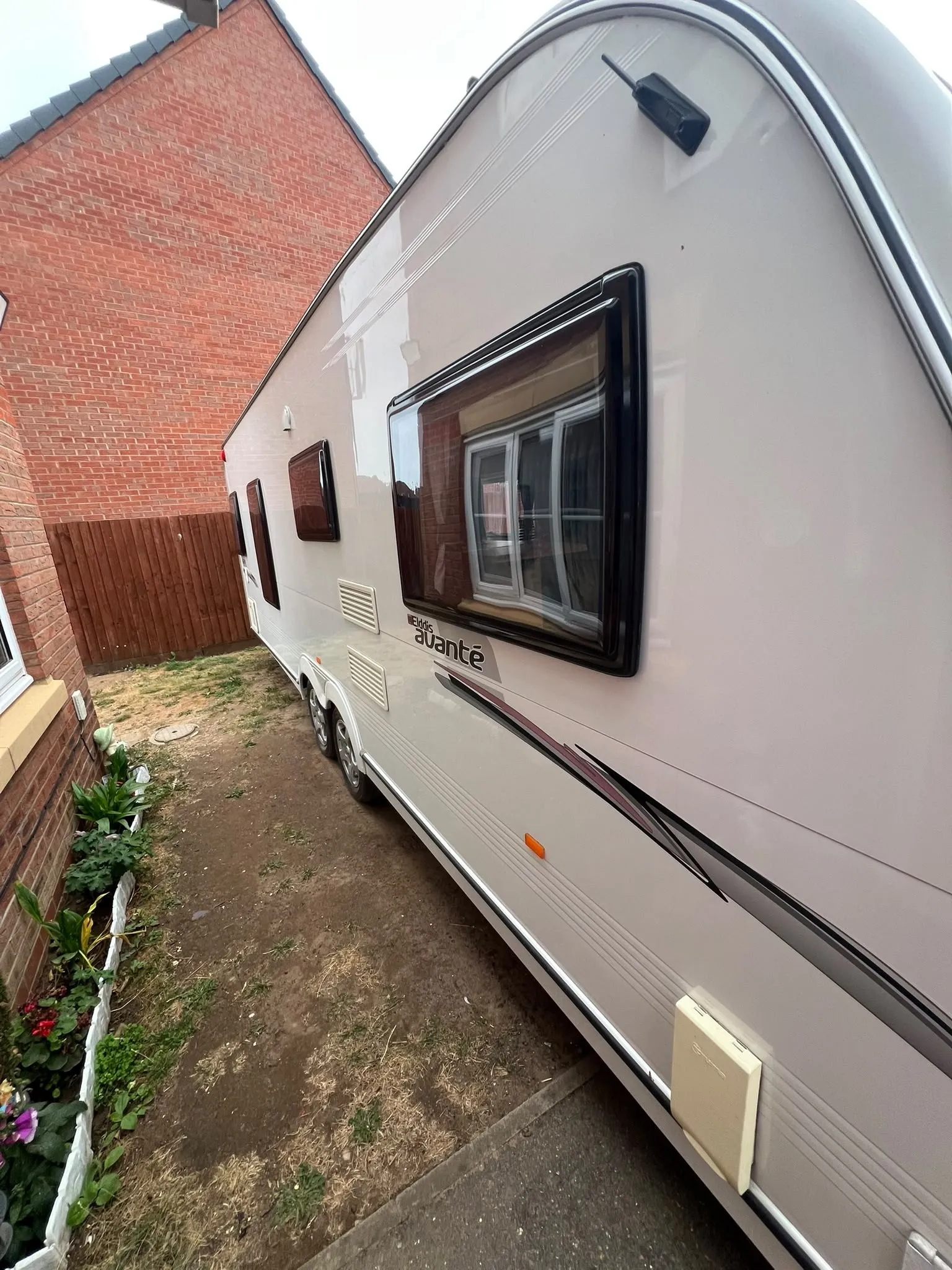
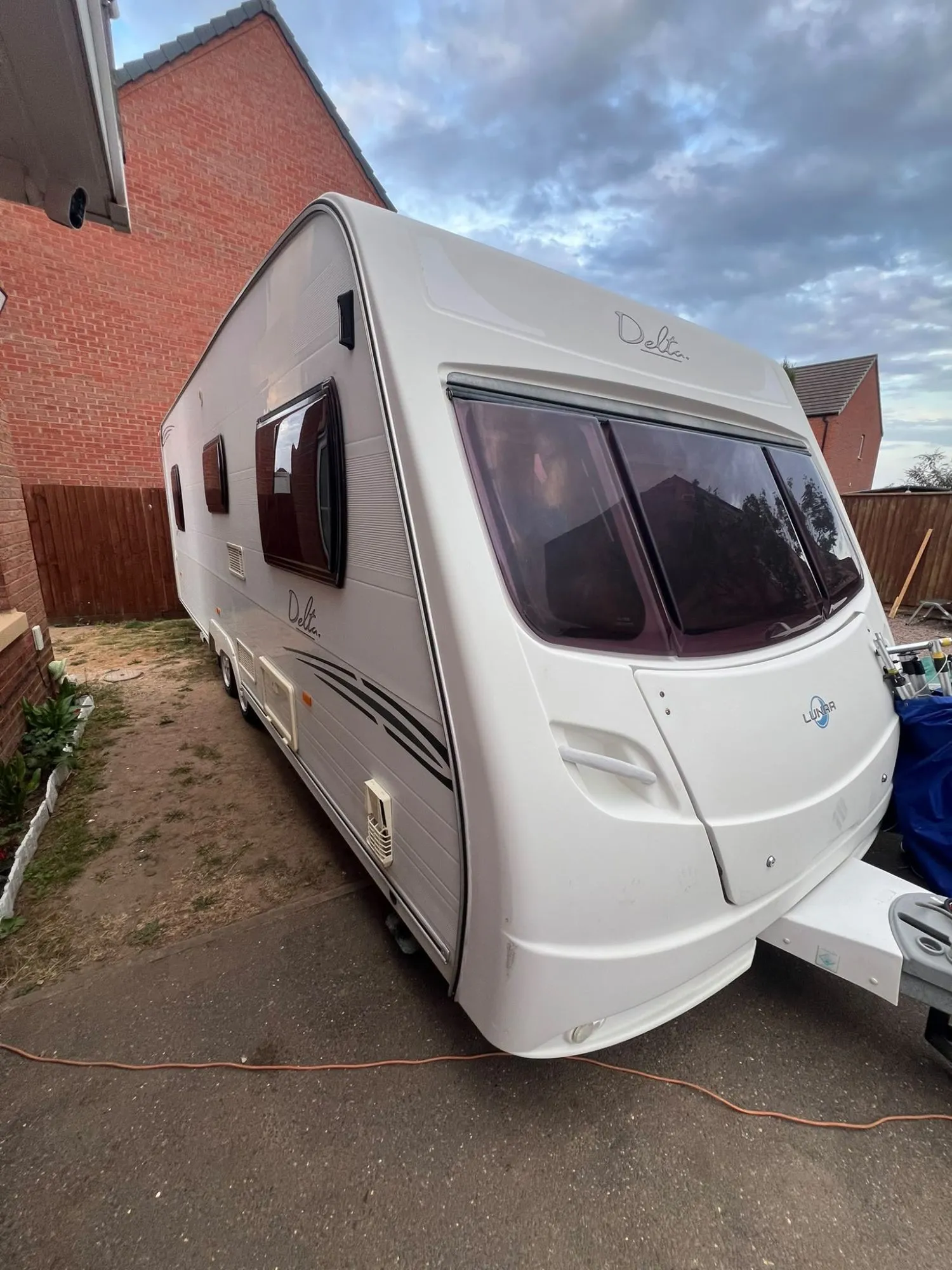
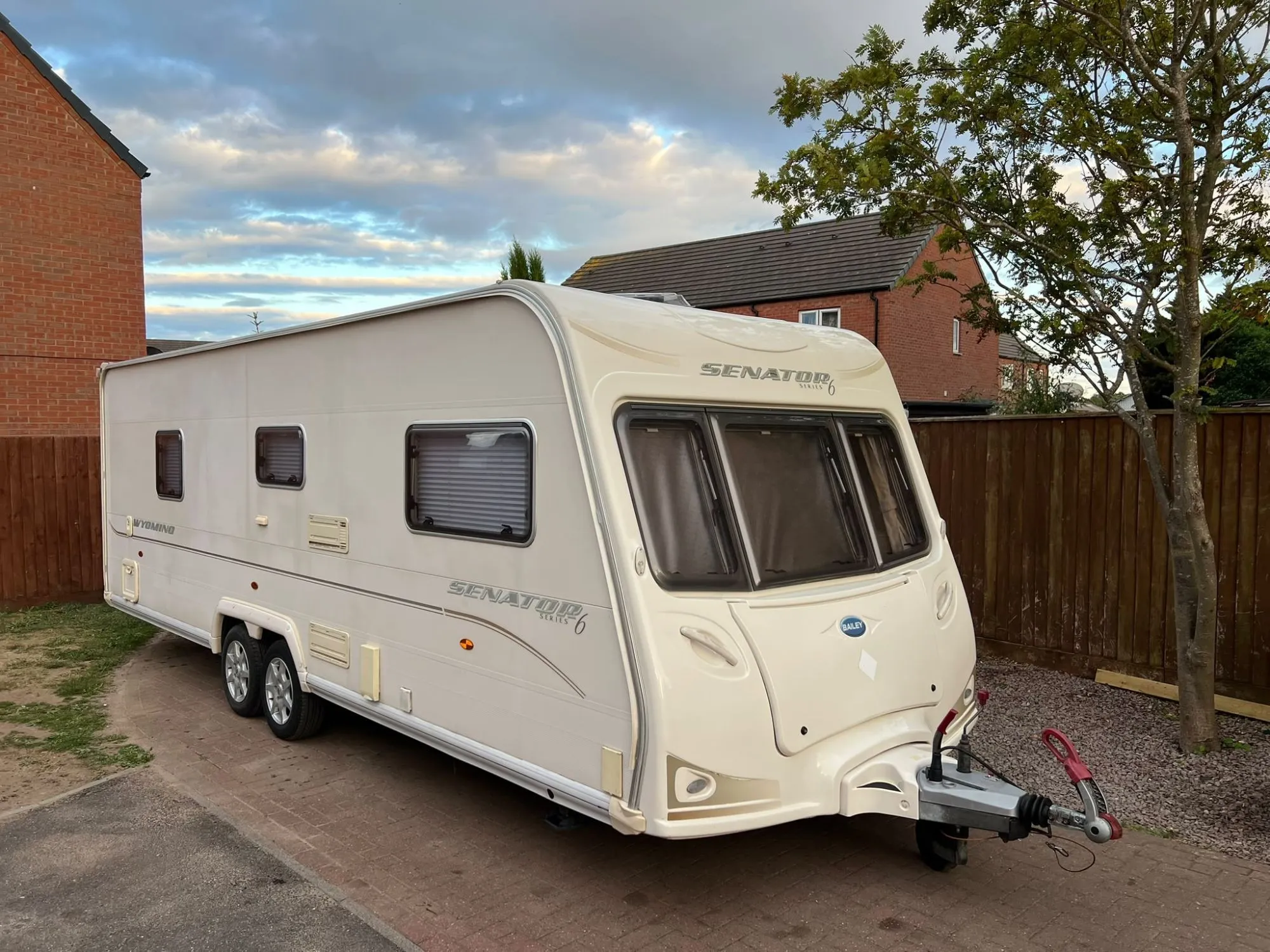
Well-known British makes such as Swift, Bailey, Elddis, Coachman and Lunar are easy to sell, so they hold their value well. Layout matters just as much as the badge:
- Fixed beds (island or French) are consistently in demand.
- End washrooms are popular with couples.
- Twin-axle caravans suit families and long stays but need a capable tow car.
- Lighter single-axle caravans appeal to more buyers because more cars can tow them.
4. Service history
A stamped service book, or annual habitation check certificates, adds real value. It proves the caravan has been maintained and, just as importantly, that its damp has been checked every year. A missing year isn’t a disaster, but a full history always strengthens the price.
5. Condition inside and out
Buyers and valuers look closely at:
- Cracked or crazed windows and roof lights
- Dents, scratches, a faded front panel or tired decals
- Worn or stained upholstery, carpets and curtains
- Smoke or pet smells
- Appliances that don’t work: fridge, heater, hob, oven or water pump
Small things add up. A thorough clean before your caravan is valued costs nothing and makes a noticeable difference.
6. Extras and accessories
Some extras add real value and make a caravan easier to sell:
- Motor mover
- Awning, especially a full awning in good condition
- Solar panel and battery
- Alarm or tracker
- Air conditioning or a satellite TV system
Basic kit such as a hook-up lead, water carriers and a jockey wheel is expected, so it won’t add much. Leaving it out, though, can lower your offer.
7. Time of year
Caravans are seasonal. Private demand usually rises from late winter into spring as people plan their holidays, and falls away in the autumn. If you’re selling privately, spring is normally the best time. Trade buyers purchase all year round. Not sure whether to wait? Read is it worth selling a caravan in winter?
8. Paperwork
A caravan with its registration document, handbook, spare keys and service records is quicker to sell and worth more than one with gaps. See our checklist of the paperwork you need to sell a caravan.
What adds value and what reduces it
| Adds value | Reduces value |
|---|---|
| Clean damp readings | Damp, soft floors or delamination |
| Full service history | Missing or lapsed servicing |
| Fixed bed or end washroom layout | Dated or unpopular layout |
| Motor mover, awning, solar | Broken appliances or missing kit |
| Tidy interior, no smells | Smoke, pet damage or stains |
| Complete paperwork and keys | Lost documents or keys |
Trade price vs retail price: what’s the difference?
It’s easy to look at a dealer’s forecourt price and expect the same for your caravan. That figure is a retail price. It includes the dealer’s preparation work, warranty, overheads and profit.
There are three realistic ways to sell, and each pays differently:
| How you sell | Typical price | Speed | Effort and risk |
|---|---|---|---|
| Private sale | Highest | Weeks to months | Adverts, viewings, payment fraud risk |
| Part-exchange | Lowest | Quick | You must buy from that dealer |
| Trade buyer | Fair trade price | Days | Minimal: collected and paid on the spot |
A private sale can get the highest figure, but you pay for it in time and hassle: advertising, strangers visiting your home, no-shows and the risk of fake bank transfers and other scams. A trade buyer offers a fair price, collects for free and pays immediately.
How to get an accurate valuation
- Gather the details: make, model, year, berths, layout and any extras.
- Be honest about condition, especially damp. It’s the one thing that most often changes an offer on the day.
- Take clear photos: the outside from all sides, the living area, the kitchen, the washroom, the bedroom and any damage.
- Compare similar caravans for sale online to get a feel for the market.
- Ask for a free valuation. A good buyer will give you a firm figure from photos.
Tip: The more detail and photos you share up front, the firmer your offer will be. An honest description means no surprises on collection day.
Get a free caravan valuation
At Aki Caravan Buyers, we’re a local business based in Boston, Lincolnshire, and we buy touring caravans, motorhomes and campervans across the UK. Fill in our 60-second form and send us a few photos on WhatsApp. We’ll come back with an honest offer, usually the same day, with free collection and payment on the spot. There’s no obligation to sell.
Frequently asked questions
How do I find out how much my caravan is worth?
Compare it with similar caravans for sale (same make, model, year and layout), then allow for condition, damp and service history. For a firm figure, send photos and details to a caravan buyer for a free valuation. Aki Caravan Buyers usually replies on WhatsApp the same day.
Is the caravan price guide the same as what I will be paid?
No. Price guides and dealer adverts show retail prices, which include the dealer’s preparation, warranty and profit. Trade and part-exchange prices are lower. Private sales usually land somewhere between the two, but take longer and carry more risk.
Does a damp caravan have any value?
Yes. Damp reduces the price, sometimes significantly, but damp caravans are still bought for repair, parts or holiday use. Being honest about the damp gets you a reliable offer that will not change on collection day.
When is the best time of year to sell a caravan?
Private demand is usually strongest from late winter into spring, as people plan their summer holidays. Trade buyers such as Aki Caravan Buyers buy all year round, so you can sell whenever suits you.
Do extras like a motor mover or awning increase the value?
Yes. A motor mover, a good awning, a solar panel and an alarm or tracker all add value and make the caravan easier to sell. Basic kit such as hook-up leads and water carriers is expected, so leaving it out can reduce your offer.